QUESTIONS
Open, plain, unhurried
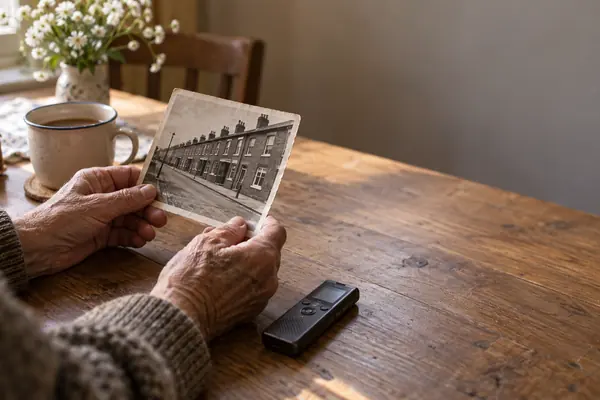
The Oral History Society advises plain words that avoid suggesting the answers, and giving the person plenty of time to tell you what they think matters.
Try a question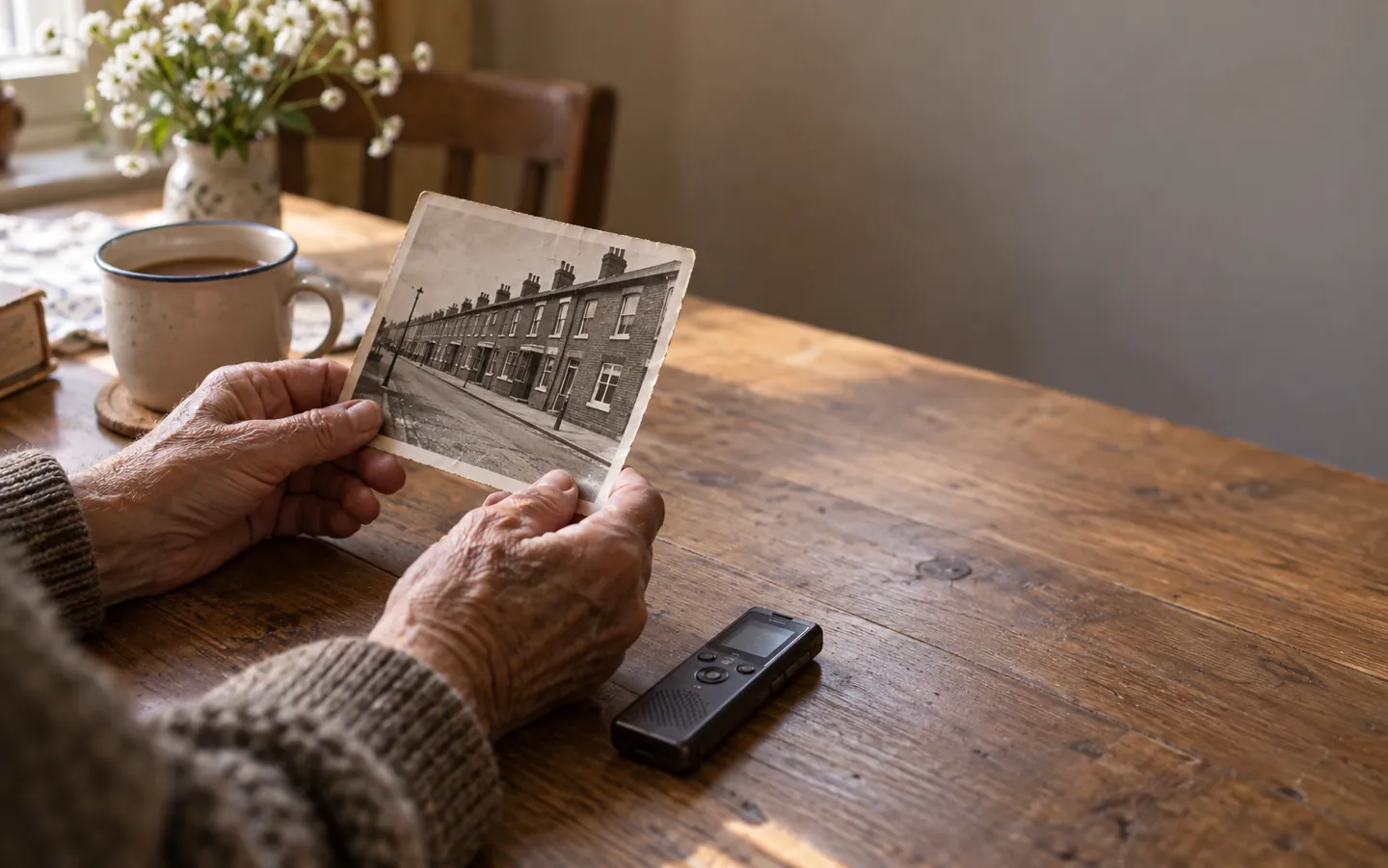
 doodlememoir
A FAMILY MEMOIR, IN THEIR OWN VOICE
2–3 SESSIONS for a full life story
The best family memoir may be one you record, not write.
Oral historians have practical, tested advice for capturing a life story well: open questions, a quiet room, a good microphone, a signed form and a safe home for the file afterwards.
Updated
Try a questionTHE SHORT ANSWER
Oral history guidance comes back to three things:
good questions, good sound and a safe archive.
QUESTIONS
The Oral History Society advises plain words that avoid suggesting the answers, and giving the person plenty of time to tell you what they think matters.
Try a questionSOUND
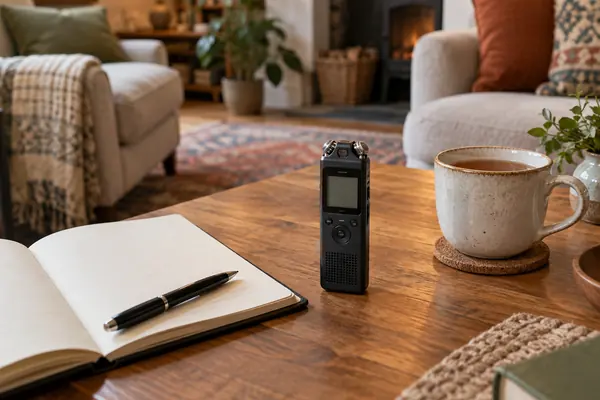
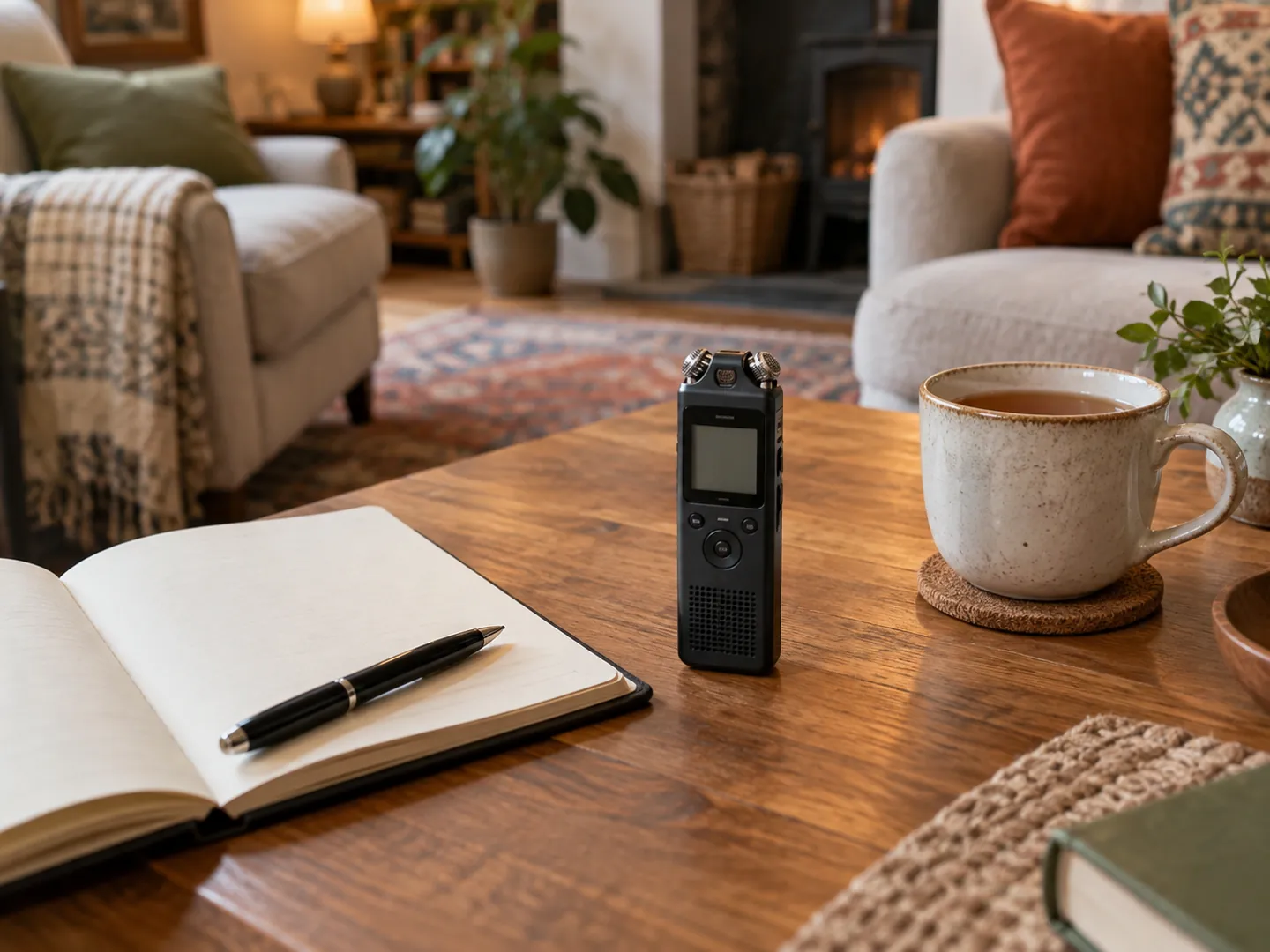
Pick a room away from a busy road, switch off radios, televisions and phones, and keep a clip-on microphone about nine inches from the speaker's mouth.
Set up the roomKEEPING IT
Keep a signed form with the recording at all times, write a content summary of the main topics and people, and make sure the audio file is stored and backed up.
Consent and copyrightA QUICK QUESTION CHECK
Pick a type of question to see what oral history guidance says about it. The bar shows how much room it gives the person to tell their own story.
Based on the Oral History Society's guidance for beginners and for family historians.
TWO NUMBERS WORTH KNOWING
One figure on how long a life story takes,
one on where the microphone should go.
2–3 sessions
Sessions to record a full life story
The Oral History Society says it can sometimes take two or three sessions to record a full life story. It also advises: don't over-prepare, and don't use a script.
TIME · ORAL HISTORY SOCIETY
≈ 9 inches
Clip-on microphone to mouth
Put a clip-on microphone about nine inches from the person's mouth. With a hand-held microphone, the closer the better, but not resting on the recorder or a hard surface.
SOUND · ORAL HISTORY SOCIETY
On equipment, the Society's family history guidance suggests the best recorder your budget allows, warning that a recorder costing £20 is unlikely to make audible recordings.
FOUR STEPS BEFORE YOU PRESS RECORD
These steps come from the Oral History Society's guidance for beginners and family historians. None of them needs a studio.
Before recording, explain the purpose, how the recording will be stored and how you will use it, and agree how to handle anything they want kept private.
The guidance offers a brainstorming prompt: what would I ask person X about the family if s/he were still alive?
Choose a room not on a busy road and switch off radios, televisions and all mobile phones. Rooms with soft furnishings are good places to record.
Keep good eye contact. Nodding and smiling is much better than the ers, ums and reallys that end up on the recording.
CONSENT AND COPYRIGHT
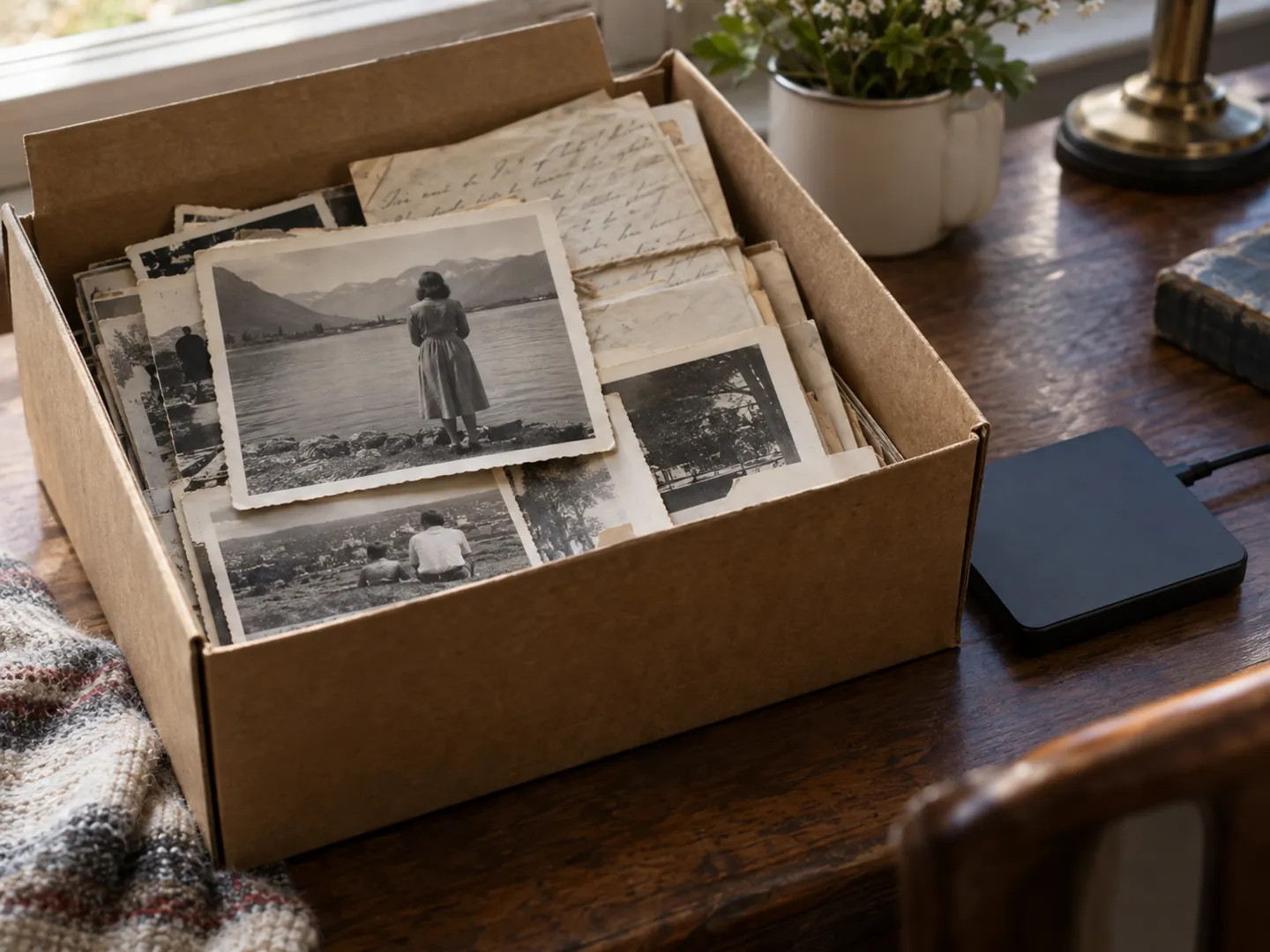
The University of Leicester's East Midlands Oral History Archive explains that a recording carries two copyrights: one in the interviewee's spoken words and one in the recording itself. A signed form sets out how the recording may be used and any restrictions; it notes the Oral History Society recommends restrictions last no more than 30 years.
For family recordings, the Society strongly recommends the form is filled in by both interviewer and interviewee after the recording is complete, kept with the audio files, and that any access restrictions the interviewee asks for are honoured.
Questions
The Oral History Society says it can sometimes take two or three sessions to record a full life story.
Open questions that need more than a yes or no answer, in plain words that do not suggest the answer. Examples from the guidance include: Can you describe the house you lived in? What sort of person was she?
Buy the best recorder your budget allows. The Society warns that a recorder costing £20 is unlikely to make audible recordings, and suggests a clip-on microphone about nine inches from the mouth.
The Society strongly recommends a form filled in by both of you after the recording, kept with the audio files at all times. It covers how the recording may be used and any restrictions.
Not necessarily. The Society suggests a content summary of the main topics and people; a verbatim transcript is optional but takes a lot of time.
Sources
ABOUT THIS NAME
doodlememoir.com is part of the DoodleSale portfolio. It isn't in an auction right now, but you can ask about leasing it.